

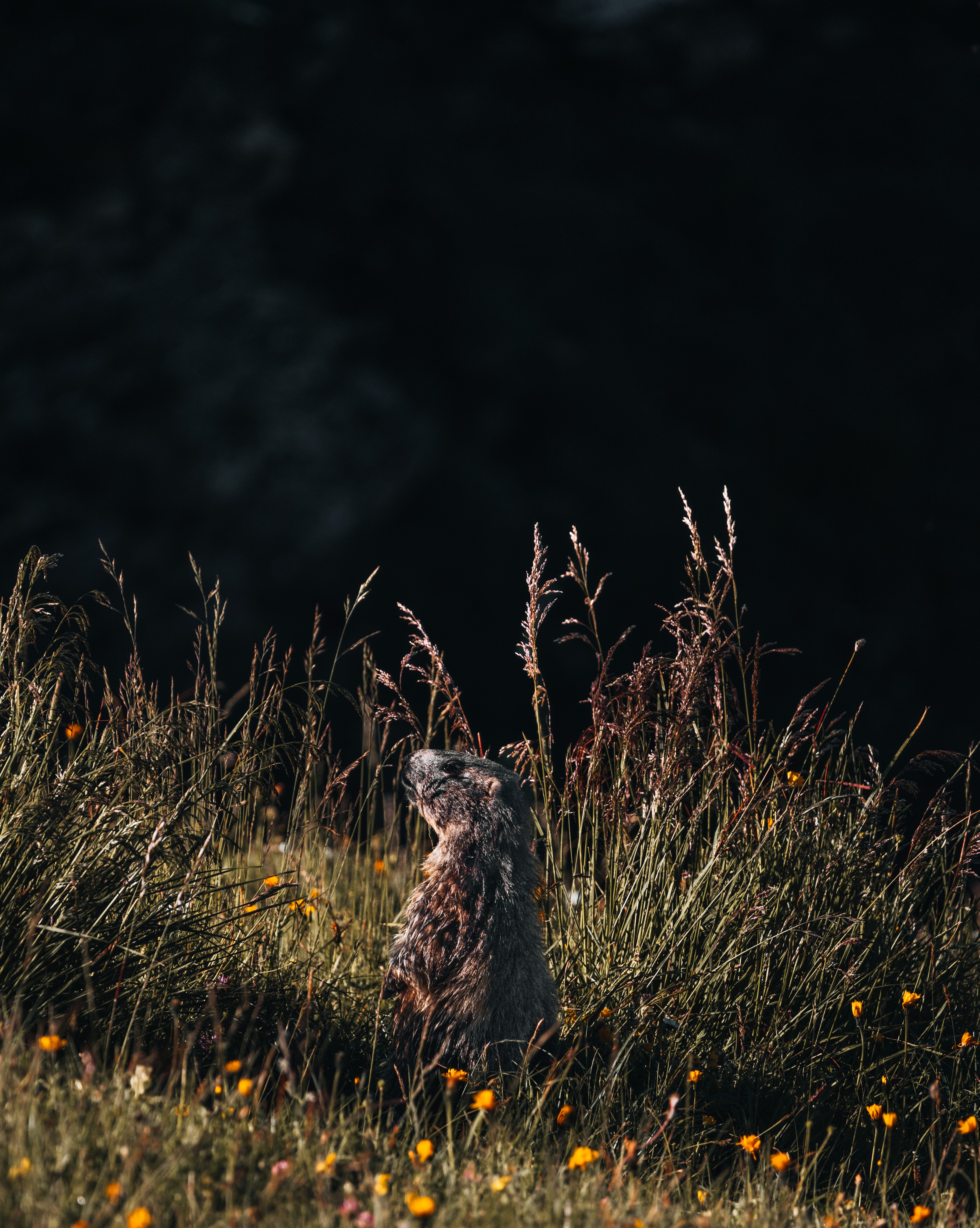
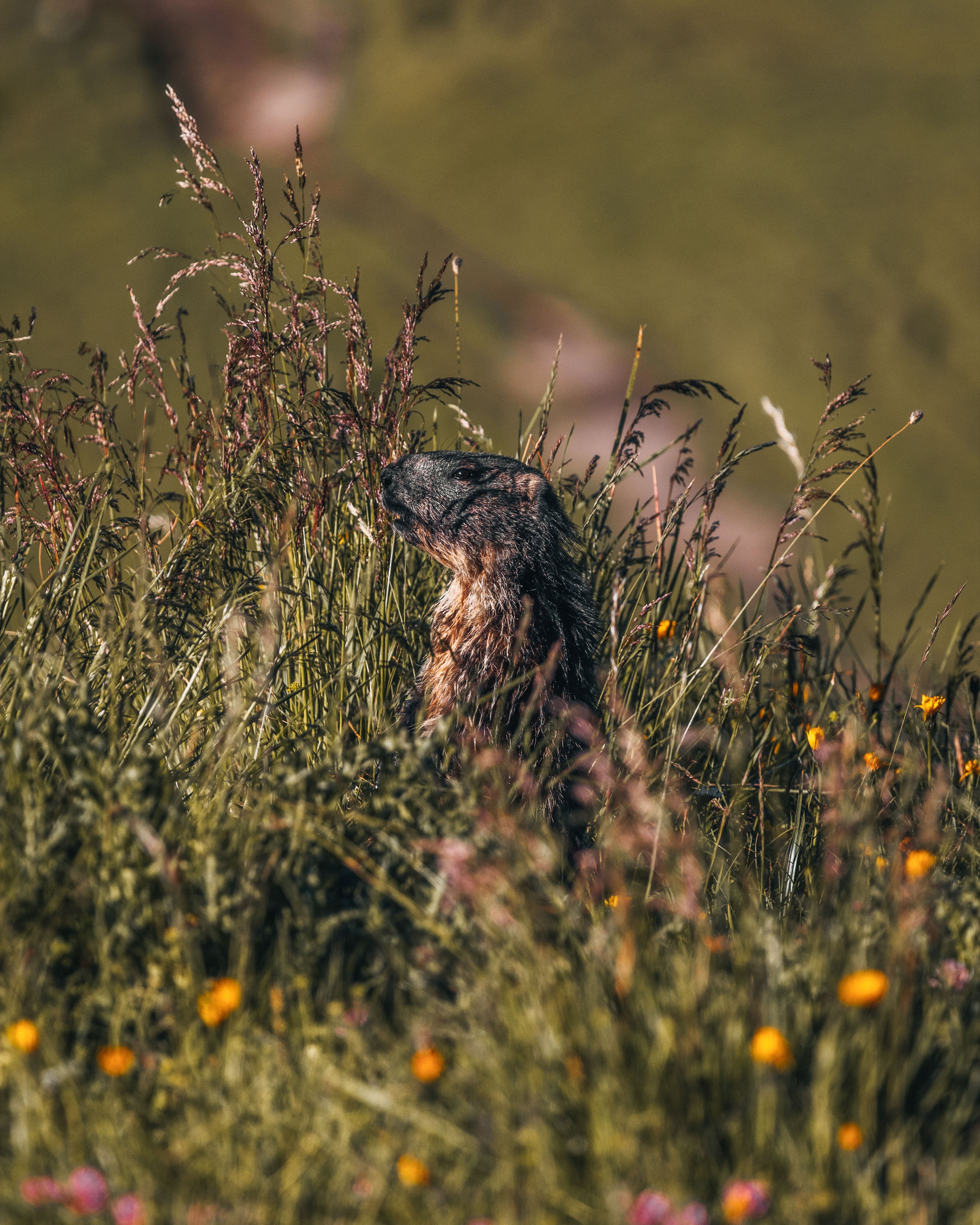
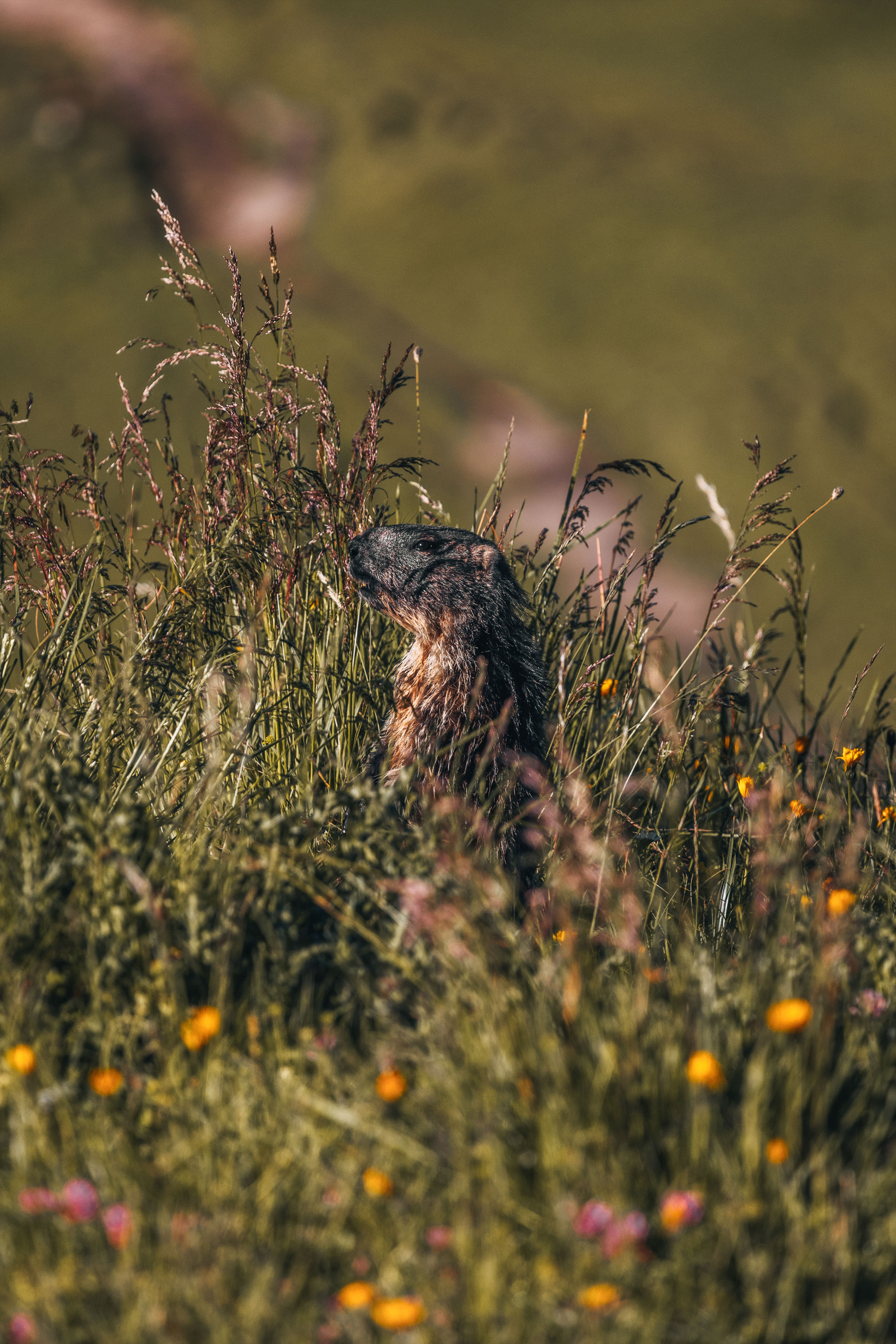
Well, who’s that peeking out of the bushes?
The Jungfrau Region doesn’t just wow visitors with breathtaking peaks, deep valleys and spectacular panoramas – it’s also a true paradise for animal lovers. Among rugged rock faces, flower-filled alpine meadows and quiet forests lives a rich variety of wildlife. Keep your eyes open while hiking and you might suddenly hear a marmot whistle, spot a chamois nimbly scrambling up the slope or see a golden eagle circling high above. Here we introduce you to three particularly fascinating animals – and reveal how you might get up close to them (without disturbing them!).
Marmots – the Alps’ watchful whistleblowers
Marmots are real crowd-pleasers. These plump rodents live in large family groups in burrows they dig themselves, usually above 1,500 metres. You’ll often see them around Kleine Scheidegg, on the Männlichen or in the Gemmenalphorn range – or rather, hear them! Their loud warning whistle often lets you know from afar that they’ve already spotted you. Marmots are most active from spring to autumn – they sleep through the winter deep underground.
Fun fact: Marmots hibernate for up to seven months – which means they sleep through more than half the year!
Cows – the laid-back mountaineers
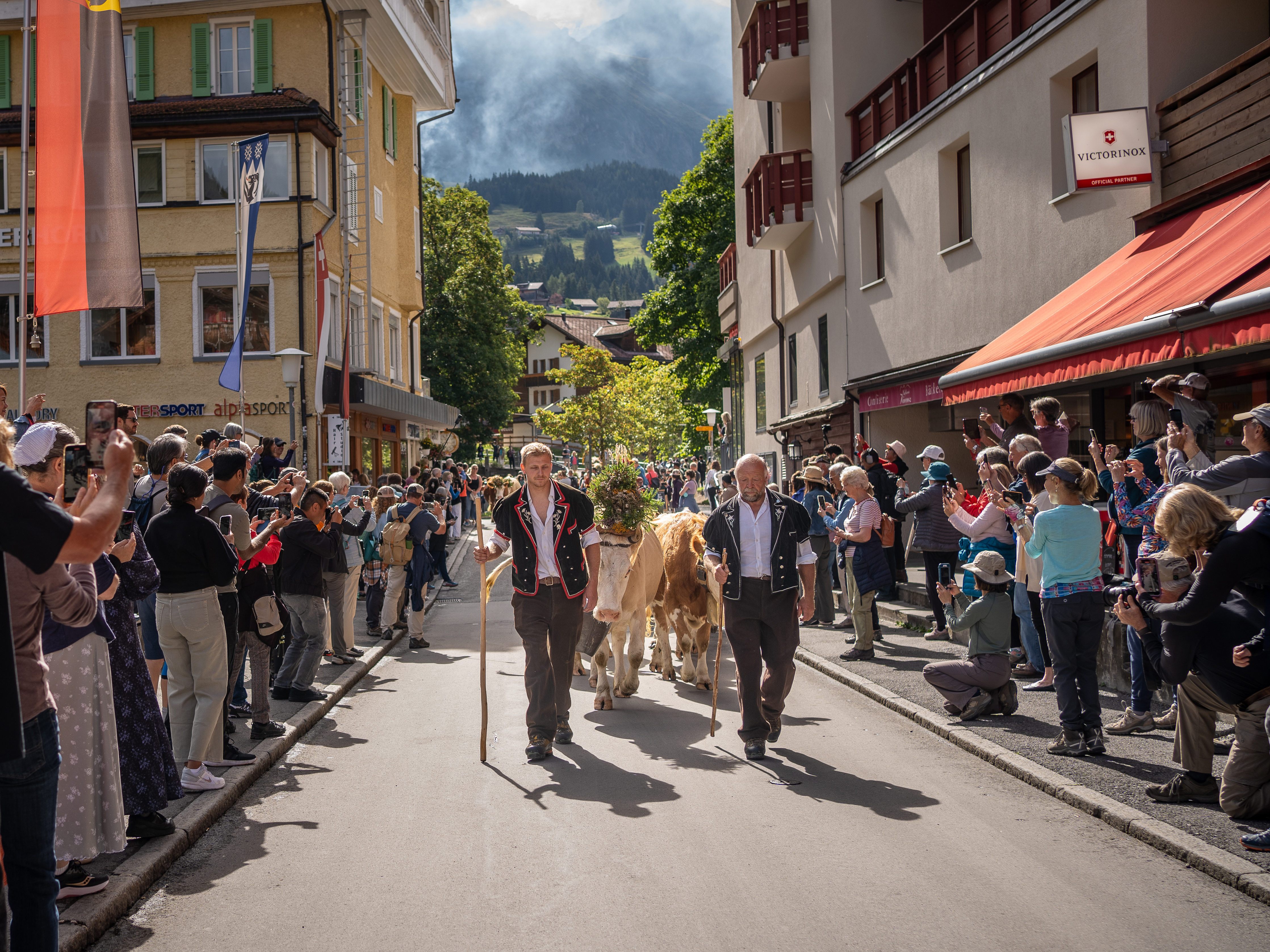
Few images define the Jungfrau Region more than cows grazing peacefully on lush alpine pastures. With their gentle nature and jingling bells, they are an inseparable part of the mountain landscape. You’ll come across them from early summer well into autumn, especially around Wengen, Grindelwald and Kleine Scheidegg. And if you hear a friendly “moo” on your hike, you know you’re experiencing Switzerland at its most authentic.
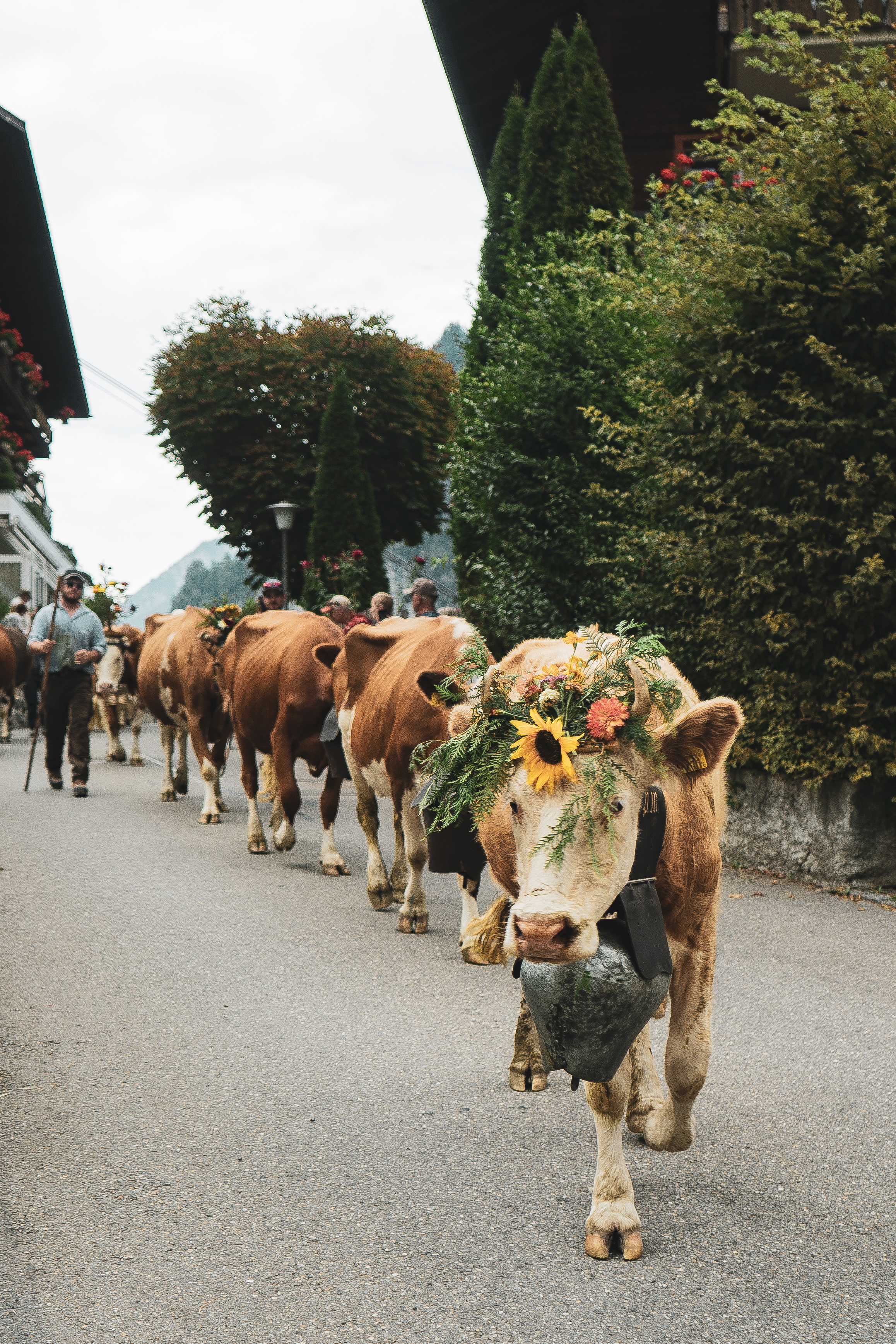
Tip: Around September, the cows make their way down from the mountains to the valleys during the Alpabzug, the traditional cattle descent – a perfect chance to see them up close, decked out in flowers and festive finery.
Fun fact: Cows really do have the best view – they can see almost 330 degrees around them without moving their heads!

Goats – the cheeky climbers
Goats are the unsung stars of the Jungfrau Region’s steep slopes. Their incredible sure-footedness and curiosity make them a charming sight on many alpine hikes, for example around Mürren, Gimmelwald or Meiringen. They’re especially active in summer, when they set off on daring climbs in search of food. With their lively personalities, they bring not only life but plenty of laughs to the alpine pastures.
Tip: Join the goat herding at Steessiboden to get to know Grindelwald’s goats up close and personal. Find out more here: Ziegensenntum Steessiboden – Jungfrau Region Tourismus AG
Fun fact: Goats remember faces – and prefer people who look friendly!


Golden eagles – the kings of the skies
With a wingspan of up to 2.3 metres, the golden eagle is one of the most impressive animals in the region. You’ll rarely see one up close – but if you turn your eyes to the sky, with a bit of luck you might watch one glide silently over the mountain ridges. Your best chances of spotting an eagle are around the Lauterbrunnen Valley, the Faulhorn area and the Schilthorn. The ideal time is from late spring into autumn, when the thermals are strong enough.
Fun fact: When diving, golden eagles can reach speeds of over 200 km/h – that’s Formula 1 pace with feathers!
Chamois – the mountains’ climbing artists
With their curved horns and agile build, chamois are perfectly adapted to alpine life. They prefer rocky, steep terrain above the tree line – for example around Schynige Platte, in the Lauterbrunnen Valley or above Mürren. The best time to watch them is in spring and autumn, when they come further down in search of food. In summer, they often retreat to higher, cooler altitudes. Your chances of spotting a chamois are highest in the early morning.
Fun fact: Chamois can effortlessly scale slopes that you’d struggle to climb even on all fours.
Tip: Guided wildlife watching in Grindelwald
If you’d like to get especially close to the local wildlife without disturbing it, join a guided wildlife-watching tour in Grindelwald. Accompanied by a hunter and equipped with a camera and a spotting scope, you’ll set off early in the morning – with the chance to spot chamois, ibex or even eagles. Find out more here: Guided wildlife watching – Grindelwald Tourism
In a nutshell: eyes open – heart wide open
The wildlife of the Jungfrau Region is as diverse as it is impressive. Whether you’re a keen hiker, a nature photographer or simply curious – with a little luck and patience, you can experience magical moments with the wild residents of the Alps along the way. Always remember: watch from a distance, avoid making noise and give the animals their space. That way, you’ll help make sure these encounters remain possible for years to come.


