People – and the Swiss in particular – have come up with all sorts of ways to get themselves and their goods up the mountain. Nowhere is this easier to see than in the Jungfrau Region, which has everything from funiculars to cogwheel railways. In this blog, we take a look at the differences.
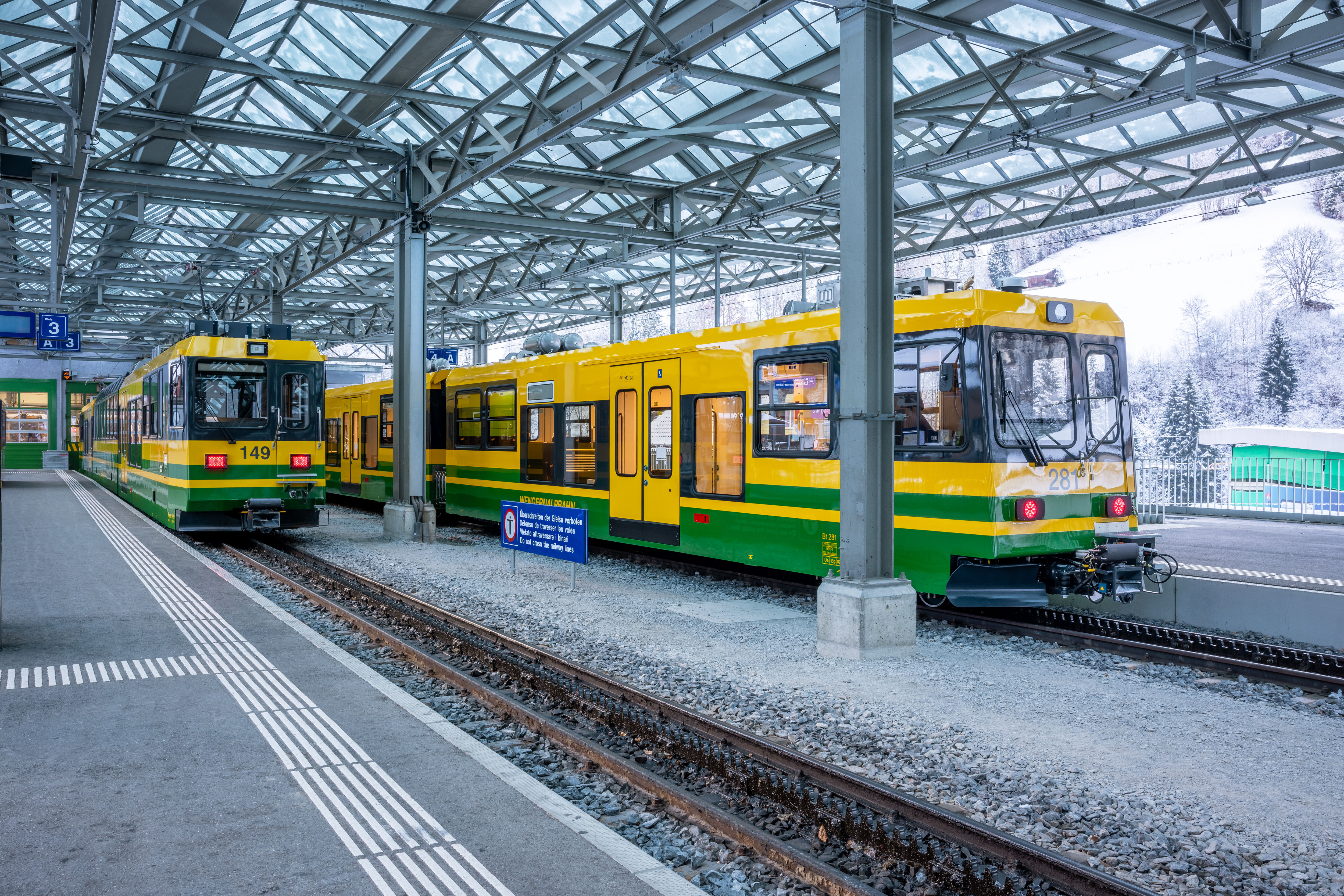
The cogwheel railway
A cogwheel railway is a rail system that can tackle particularly steep sections thanks to a toothed rack built into the track. A cogwheel on the train engages with the rack between the rails, allowing it to travel safely uphill and downhill – ideal for alpine terrain. The Wengernalp Railway (WAB) is a prime example of this technology. As the longest continuous cogwheel railway in the world, the WAB runs from Lauterbrunnen and Grindelwald past the Eiger, Mönch and Jungfrau up to Kleine Scheidegg. Its unique route is not only an impressive technical solution to the steep climbs but also a spectacular panoramic journey that lets you experience the beauty of the Swiss Alps in an unforgettable way.

The 3S-gondola
A tricable gondola (3S) is a modern cableway system with two track ropes for stability and one haul rope that moves the cabins. This design allows for especially large gondolas and keeps them very stable even in strong winds. The Eiger Express in Grindelwald is an impressive example of this technology. The state-of-the-art tricable gondola links Grindelwald with the Eigergletscher station, cutting travel time considerably and giving guests fast, comfortable access to the region. With its sturdy cabins for up to 26 people, the Eiger Express is highly wind-resistant and ideally suited to alpine conditions at high altitude. The ride offers stunning views of the Eiger North Face, making the Eiger Express an attraction that perfectly combines technical innovation with a nature experience.


The funicular
A funicular is a special type of railway that travels along steep tracks and is pulled by a cable. Often, two cars are connected by a single cable and move in opposite directions, counterbalancing each other to use energy efficiently. A fascinating example is the Gelmer Funicular (Gelmerbahn). It is considered the steepest open-air funicular in Europe, with a spectacular gradient of up to 106%. Originally built to transport materials to the Gelmer reservoir, the Gelmer Funicular is now a tourist attraction that takes its passengers on a thrilling ride that feels almost like a roller coaster.

The aerial cableway
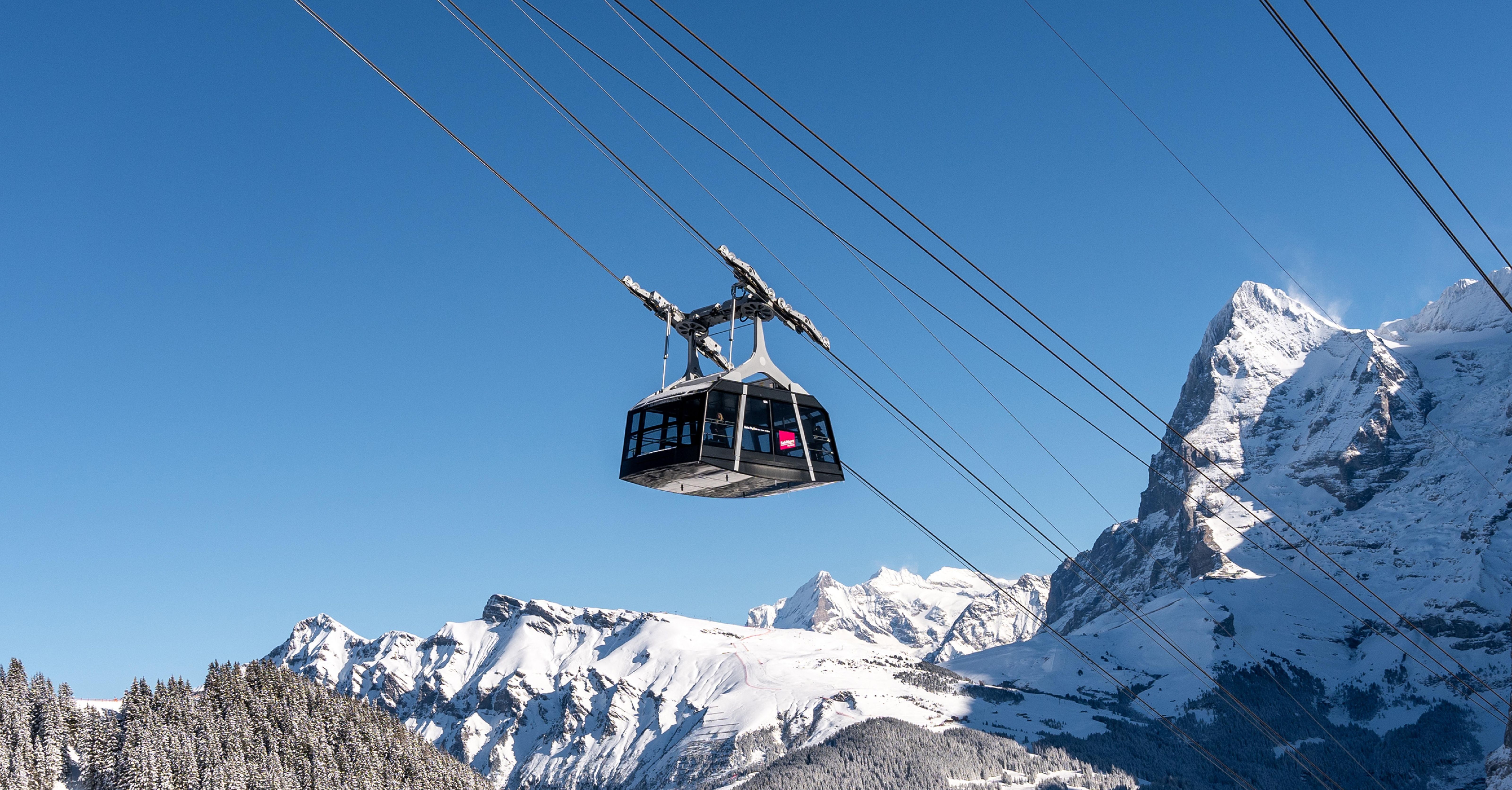
An aerial cableway is a type of cable car in which two large cabins shuttle back and forth in opposite directions along parallel track ropes, pulled by a haul rope. This means large numbers of people can be transported safely and efficiently up steep slopes and over long distances. A classic example is the Schilthorn Cableway. It runs from Stechelberg to Mürren and then on up to the Schilthorn, where visitors can enjoy the Piz Gloria panoramic restaurant.
With its major Schilthornbahn 20XX project, the Schilthorn Cableway has completely modernised its infrastructure and redefined the mountain experience. The new direct link between Stechelberg and Mürren – the steepest aerial cableway in the world – is already up and running, bringing guests into the mountains faster and more comfortably. The spacious new panoramic cabins and modernised stations also offer greater comfort, accessibility and energy efficiency. With the new systems now in operation on the remaining sections, the connection to the Schilthorn has become significantly more efficient and less dependent on the weather.

The gondola lift
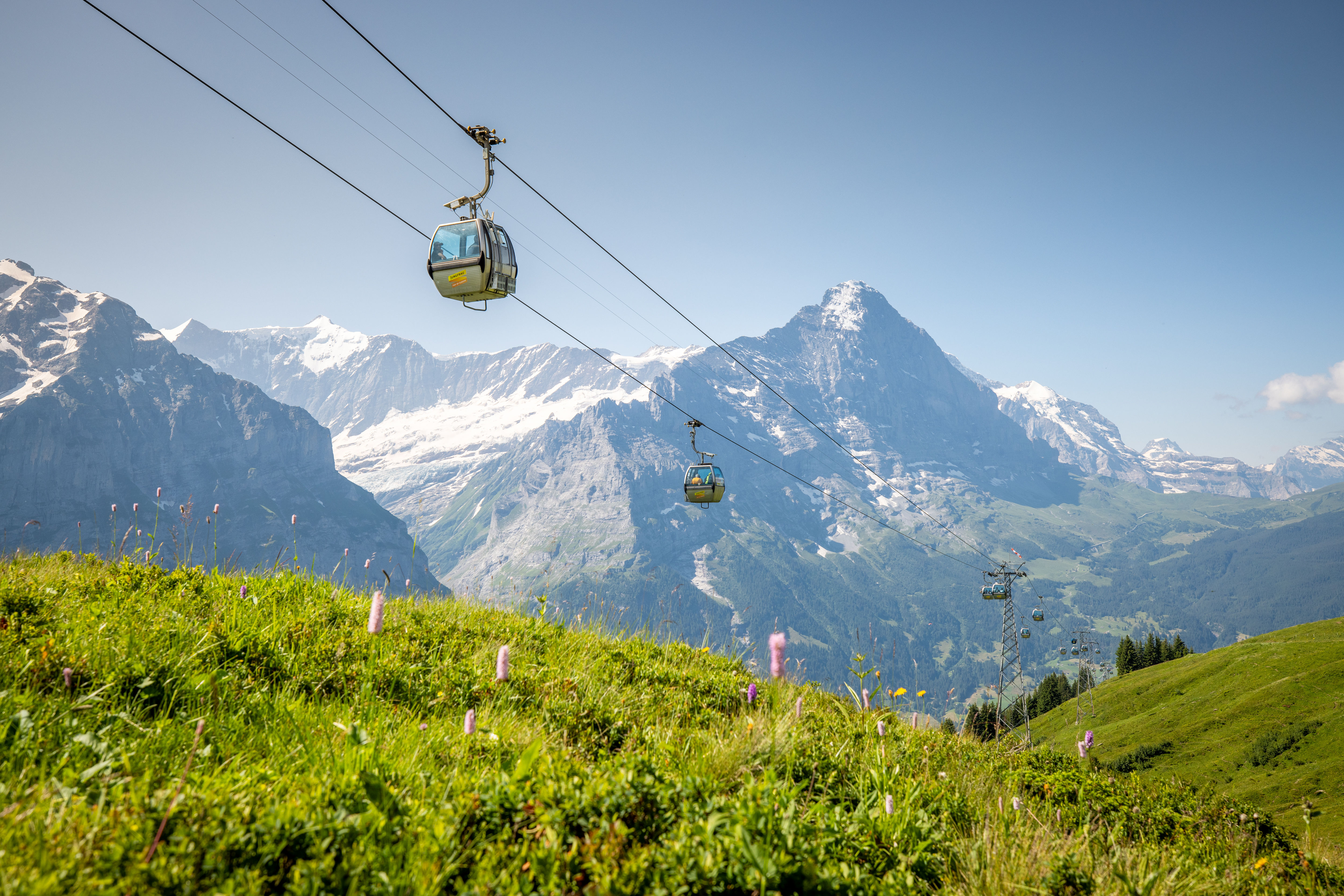
A gondola lift is a monocable system in which many small cabins hang from a continuously circulating rope. The cabins move steadily in both directions, and passengers can get on and off at the stations without the system having to stop – making transport quick and flexible. One example is the First gondola, which runs from Grindelwald up to the First mountain station.
The First gondola is a classic gondola lift with cabins for up to six people. Besides carrying guests across several sections, it also transports goods for the mountain restaurant – and between Bort and Schreckfeld, mountain carts are hooked onto the cabins and carried back up the hill. The continuous operation and the large number of cabins make the lift particularly efficient and ideal for tourism in the region.