

Blogbuster
Water by numbers
From waterfalls and lakes to streams, rivers and glaciers, water is all around you in the Jungfrau Region. This blogbuster serves up some impressive facts and figures.
The top of the Grimsel Pass marks the European watershed. From here, water flows either via the Aare and the Rhine into the North Sea, or via the Rhône into the Mediterranean. Or to put it another way: up here, you could pee into two seas at once. Could – because relieving yourself in public is prohibited in Switzerland.

Glacial erosion has created three new lakes: Lake Trift, Lake Gauli and the glacial lake at the Lower Grindelwald Glacier. Sadly, more are set to follow.

Grimselsee, Oberaarsee, Räterichsbodensee, Gelmersee, Totensee, Mattenalpsee, Trübtsee and Engstlensee are the eight reservoirs operated by the Oberhasli hydroelectric company, Kraftwerke Oberhasli AG (KWO).

At around 20 kilometres long, the Great Aletsch Glacier is the largest glacier in the Alps.

The Lauterbrunnen Valley is known as the valley of 72 waterfalls.

At 288 kilometres, the Aare is the longest river that flows entirely within Switzerland. It starts out as a mountain stream fed by the two Aare glaciers (the Upper and Lower Aare Glaciers) and joins the Rhine as a major river at Koblenz in the canton of Aargau.

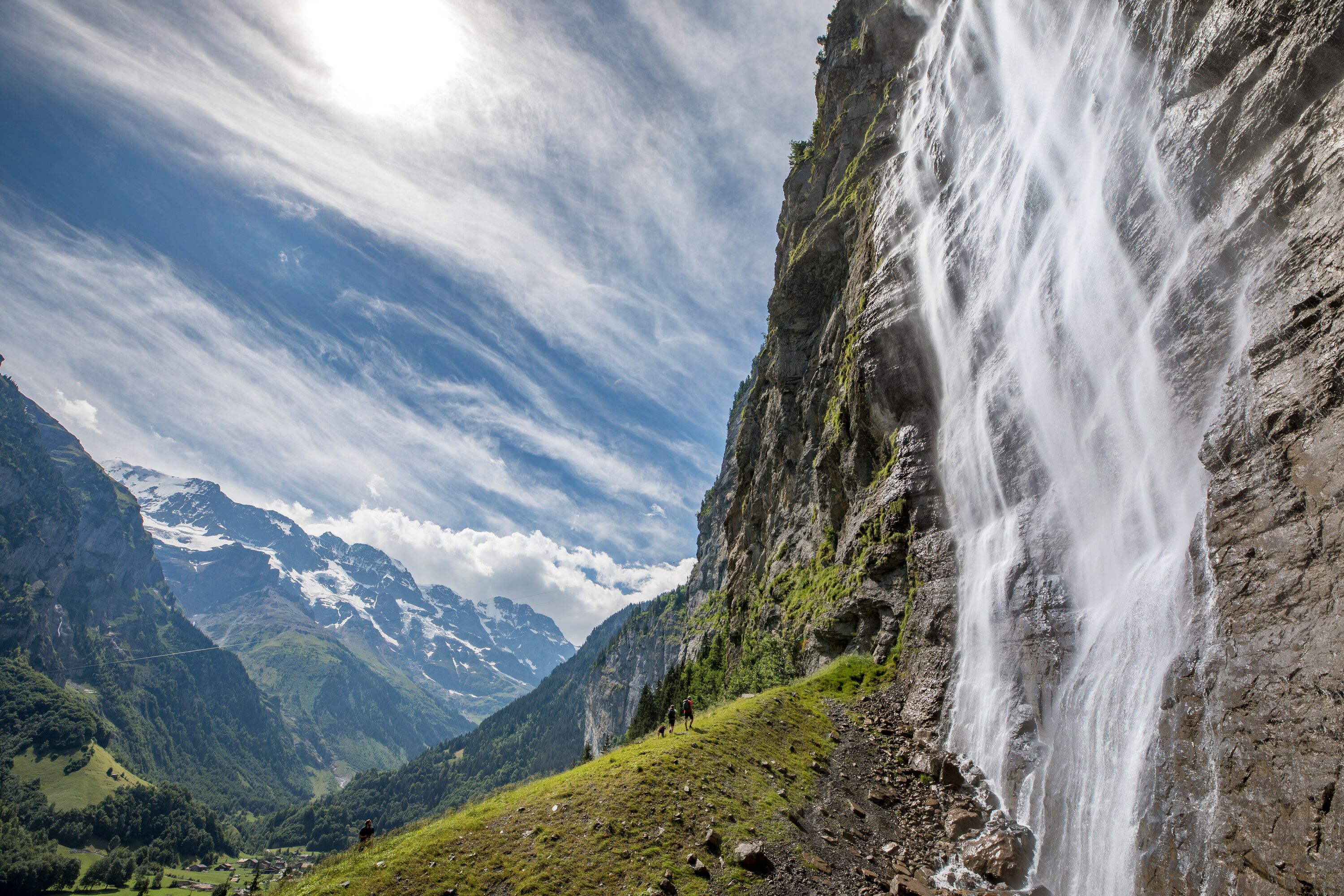
At 297 metres, the Staubbach Falls is the highest free-falling waterfall in Switzerland. It even inspired a poem by Johann Wolfgang von Goethe.
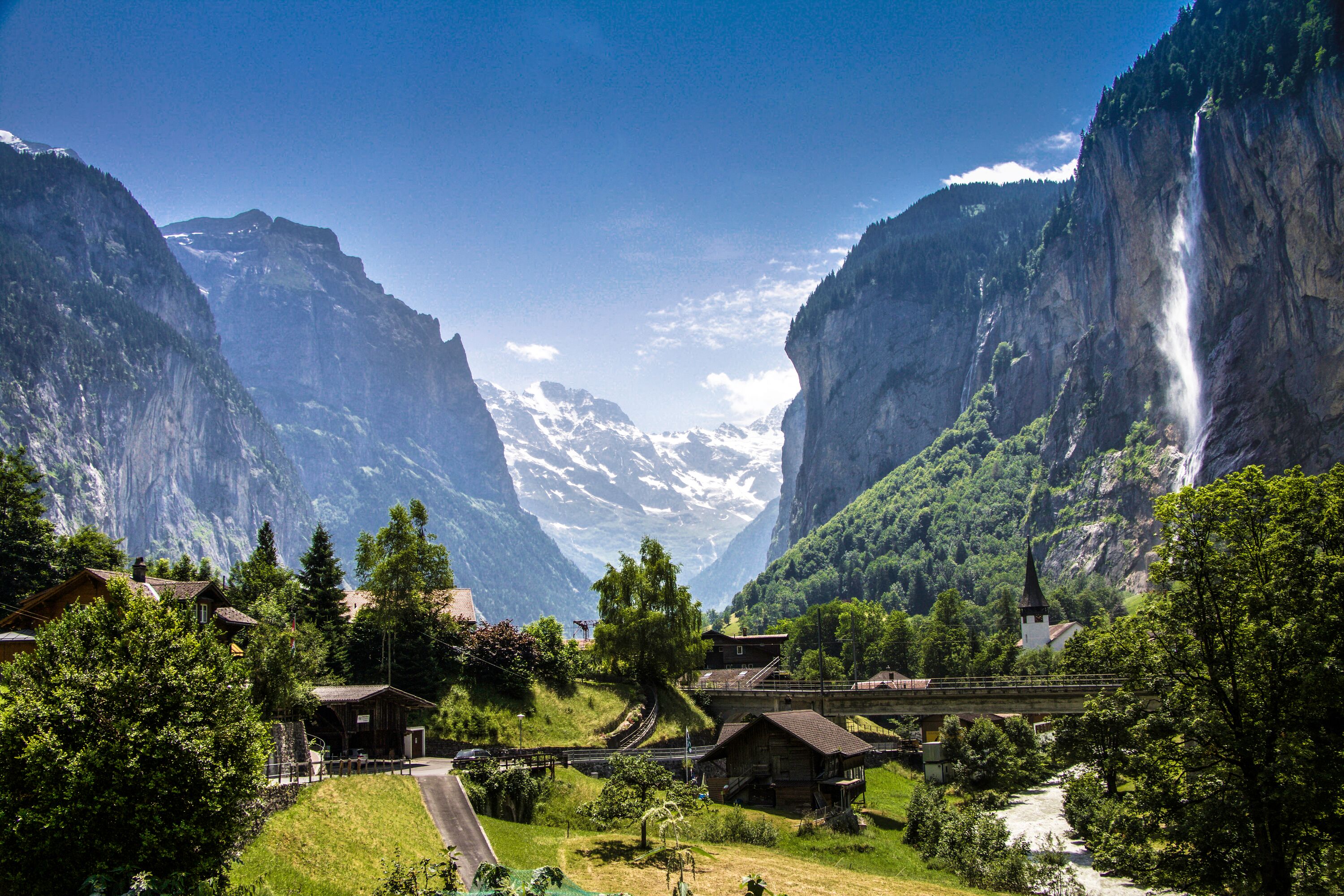
At 417 metres, the Mürrenbach Falls is the highest waterfall in Switzerland.
At Konkordiaplatz, the ice of the Aletsch Glacier is around 800 metres thick.

The Trümmelbach alone drains the vast glacier walls of the Eiger, Mönch and Jungfrau. On peak days, up to 20,000 litres of water per second rush through the Trümmelbach gorge.

The eight KWO reservoirs can hold 195 million cubic metres of water. That’s roughly as much water as almost four million people in Switzerland use in their homes in a year – or 975 million bathtubs filled to the brim.

Here’s another mind-blowing figure: the Aletsch Glacier weighs in at 10 billion tonnes – about the same as 55 million jumbo jets.


