

Une via ferrata est une voie d’escalade artificielle en montagne qui est équipée de câbles métalliques, d’échelles, de pinces et de tremplins. C’est ce que dit Wikipédia. Dans la Région de la Jungfrau, nous avons plusieurs via ferratas de ce type, toutes plus spectaculaires les unes que les autres.
Important: Oui, sur une via ferrata, tu peux escalader des parois rocheuses verticales – bien sécurisées avec un set de via ferrata – même sans grande expérience de l’escalade. Néanmoins, il y a quelques points à prendre en compte: Tu dois être en bonne forme physique, avoir le vertige et le pied sûr. Le bon équipement, la bonne technique de sécurité et une bonne planification à l’avance sont également essentiels. Comme toujours en montagne, il est également important de tenir compte de la météo.
Mürren: Pont suspendu au-dessus de l’abîme
Sur cette via ferrata, tu ne gagneras pas en hauteur. Au contraire, c’est tout le contraire. Ici, tu ne grimpes pas vers le haut, mais vers le bas. De Mürren à Gimmelwald – vue spectaculaire sur les sommets bernois de 4000 mètres incluse. La via ferrata s’étend sur environ 2,2 kilomètres. L’itinéraire passe par des ponts, des échelles et longe des parois rocheuses abruptes. Le point fort de la via ferrata est un pont suspendu: à 80 mètres au-dessus de l’abîme, au-dessus de la vallée de Lauterbrunnen.
L’entrée de la via ferrata se trouve à Mürren, à moins de dix minutes à pied de la station du téléphérique Schilthorn. Une fois arrivé à Gimmelwald, tu peux revenir au point de départ avec ce même train – ou dans la Vallée de Lauterbrunnen, à Stechelberg.


Tälli: an almost vertical ladder
The Tälli via ferrata stretches over 600 metres in altitude and offers a mixture of technical passages, steep sections and breathtaking views. The climb is well secured, with steel cables, ladders and steps to make the ascent easier. Nevertheless, you should not underestimate the difficulty, as some passages are demanding and challenging. A highlight of the via ferrata is the long ladder, which runs almost vertically. This section is both physically and mentally demanding and requires a certain amount of climbing experience and stamina. Further up, there are also exposed sections that offer a dizzying view into the depths.
The starting point for the via ferrata is the Berghaus Tälli, which you can easily reach with the Tälli gondola. The bottom station of the cable car is located on the Susten Pass road, which makes access to the via ferrata extremely easy. From the mountain station, it is only a few steps to the start of the via ferrata.

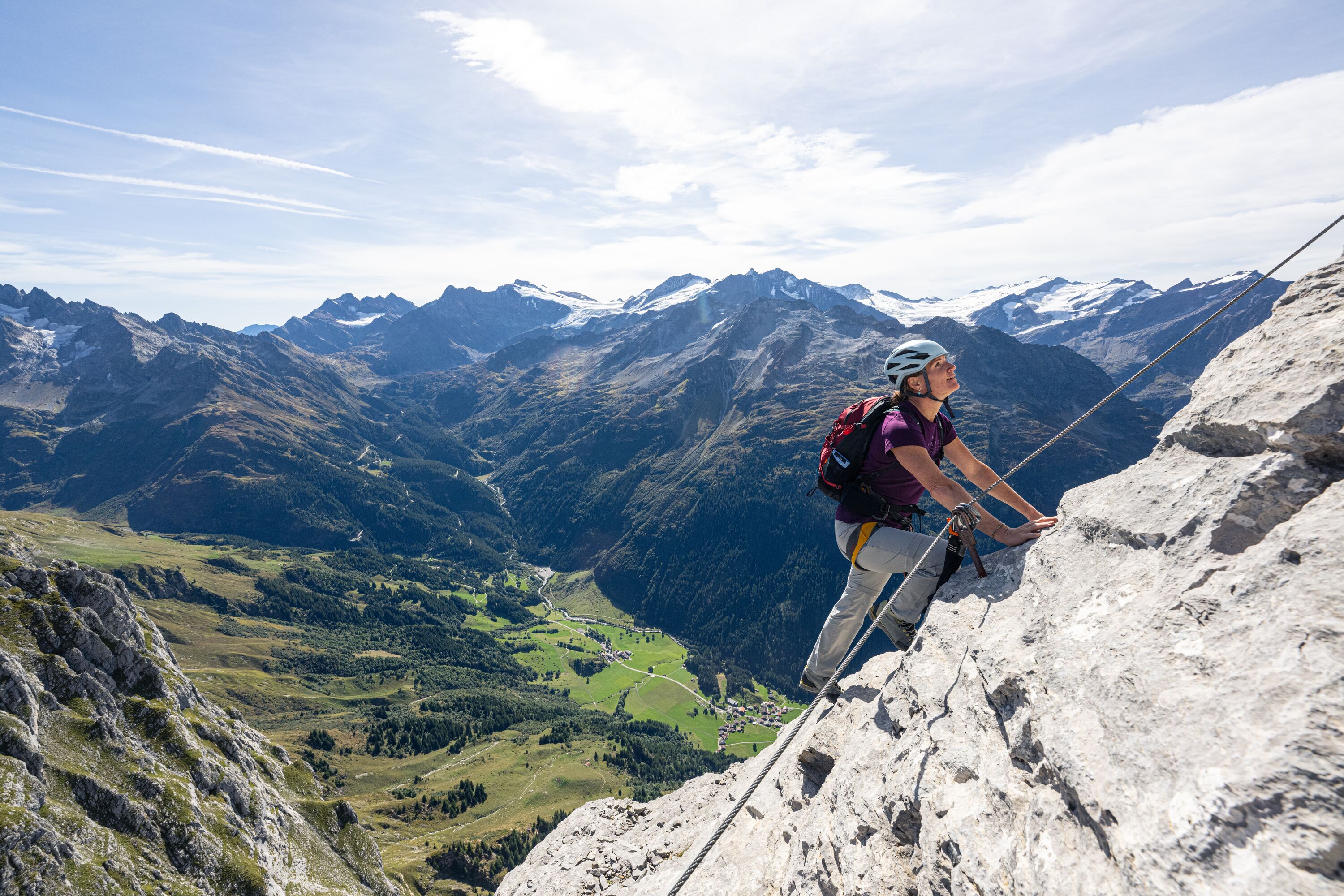
Rotstock: tout près de la face nord de l’Eiger
La via ferrata de 260 m de haut sur le Rotstock (2663 m d’altitude) est un itinéraire pour les adeptes de la via ferrata et les randonneurs de montagne expérimentés et non sujets au vertige (avec l’équipement nécessaire). Elle longe le Rotstock, un promontoire rocheux sur l’Eiger, jusqu’au sommet du Rotstock – et marque des points avec des vues spectaculaires sur les glaciers et les montagnes environnantes. La via ferrata est équipée de câbles en acier, de marchepieds et d’échelles pour faciliter l’ascension. En chemin, il y a plusieurs endroits où tu peux profiter de la vue et prendre des photos. Le passage clé est la marche verticale juste après l’entrée.
Voici comment tu arrives au début de la via ferrata: en prenant l’Eiger Express de Grindelwald Terminal jusqu’au glacier de l’Eiger à 1800 mètres d’altitude, tu arrives pour la première fois assez près de la face nord de l’Eiger. Tu suis maintenant l’Eiger Trail jusqu’à l’épaule d’herbe Wart – puis tu montes sur des traces de sentier jusqu’à l’entrée derrière une tête rocheuse, juste à gauche des gorges de Rotstock, à 2400 mètres d’altitude.

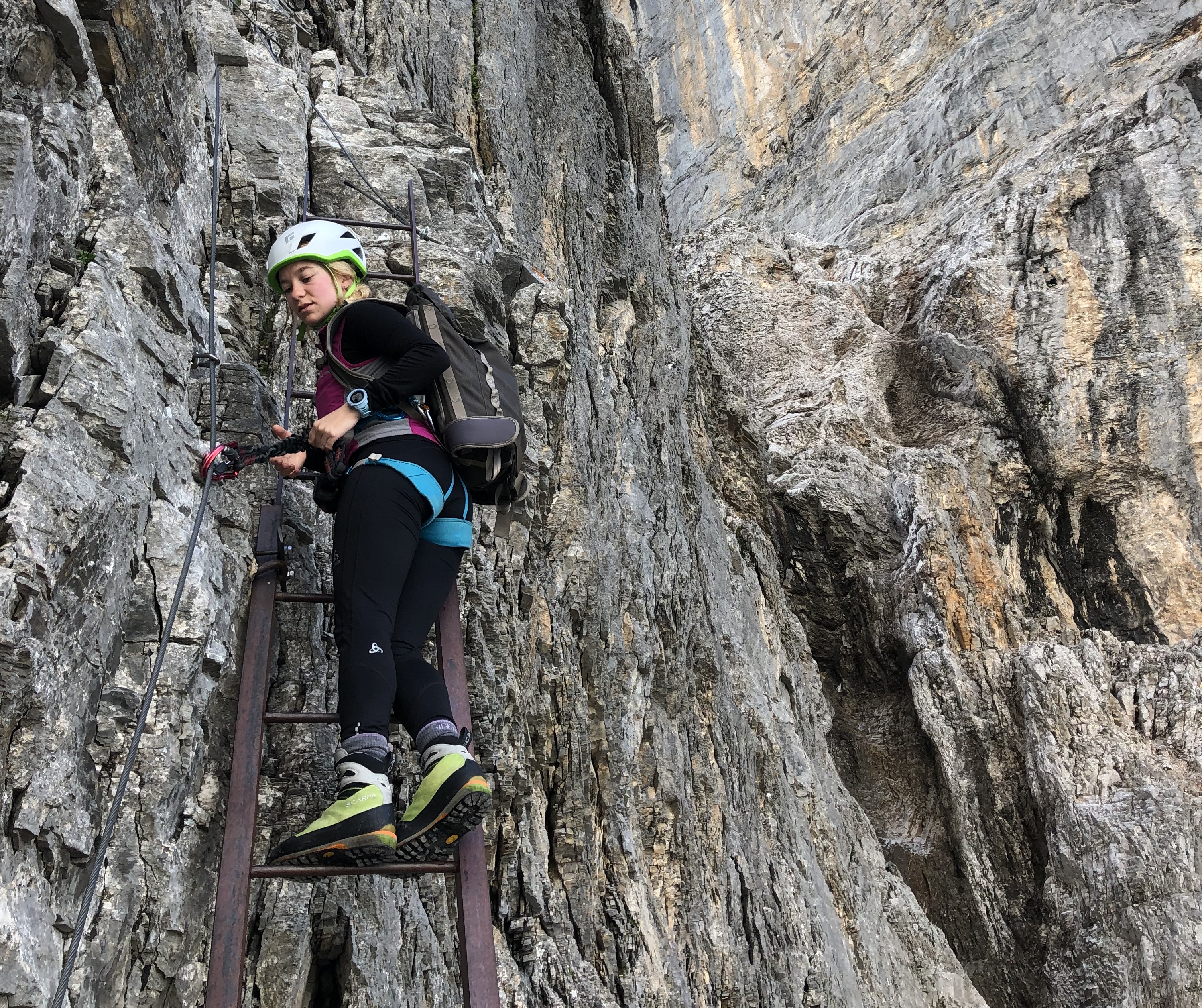
Schwarzhorn: Dizzying view into the depths
The Schwarzhorn via ferrata is technically demanding and requires good physical condition and climbing experience. The route leads over steel cables, ladders and steps that run along the steep rock faces. In the middle of the ascent, a bench invites you to take a cosy break. Some sections are exposed and offer a dizzying view into the depths. Concentration and safe handling of the climbing equipment are required here.
The starting point for the via ferrata is the First mountain station, which you can easily reach by cable car from Grindelwald. A road leads from the mountain station in the direction of Grosse Scheidegg. After about 15 minutes, a hiking trail branches off and leads to the foot of the Schwarzhorn. Follow the blue-marked path that leads to the “Grosse Chrinne” and finally to the start of the via ferrata. Once you reach the top of the Schwarzhorn, at 2928 metres above sea level, the overwhelming view – of the surrounding peaks of the Eiger, Mönch and Jungfrau or the Grindelwald valley – makes up for all the effort of the ascent.


Tierbergli: Spectacular view
The Tierbergli via ferrata boasts a spectacular panorama of the surrounding mountains, including the Sustenspitz and the Gwächtenhorn. Despite the impressive backdrop, you should always stay focussed as the via ferrata is challenging and exposed in some places. It requires a good physical condition, a head for heights and experience in using via ferrata equipment. The via ferrata leads over steep rock faces and airy passages, some of which are secured with steel cables, ladders and stepping sticks. However, the approximately 1150 metres of wire rope generally ensure a safe ascent. The sections without a wire rope are marked with cairns.
How to get to the start of the via ferrata: The route begins near the Tierbergli hut, which is known for its hospitality and breathtaking views of the surrounding peaks. You can reach it on foot from the Hotel Stein glacier in three hours and from the Umpol car park in two hours. Both locations are on the Susten Pass road.
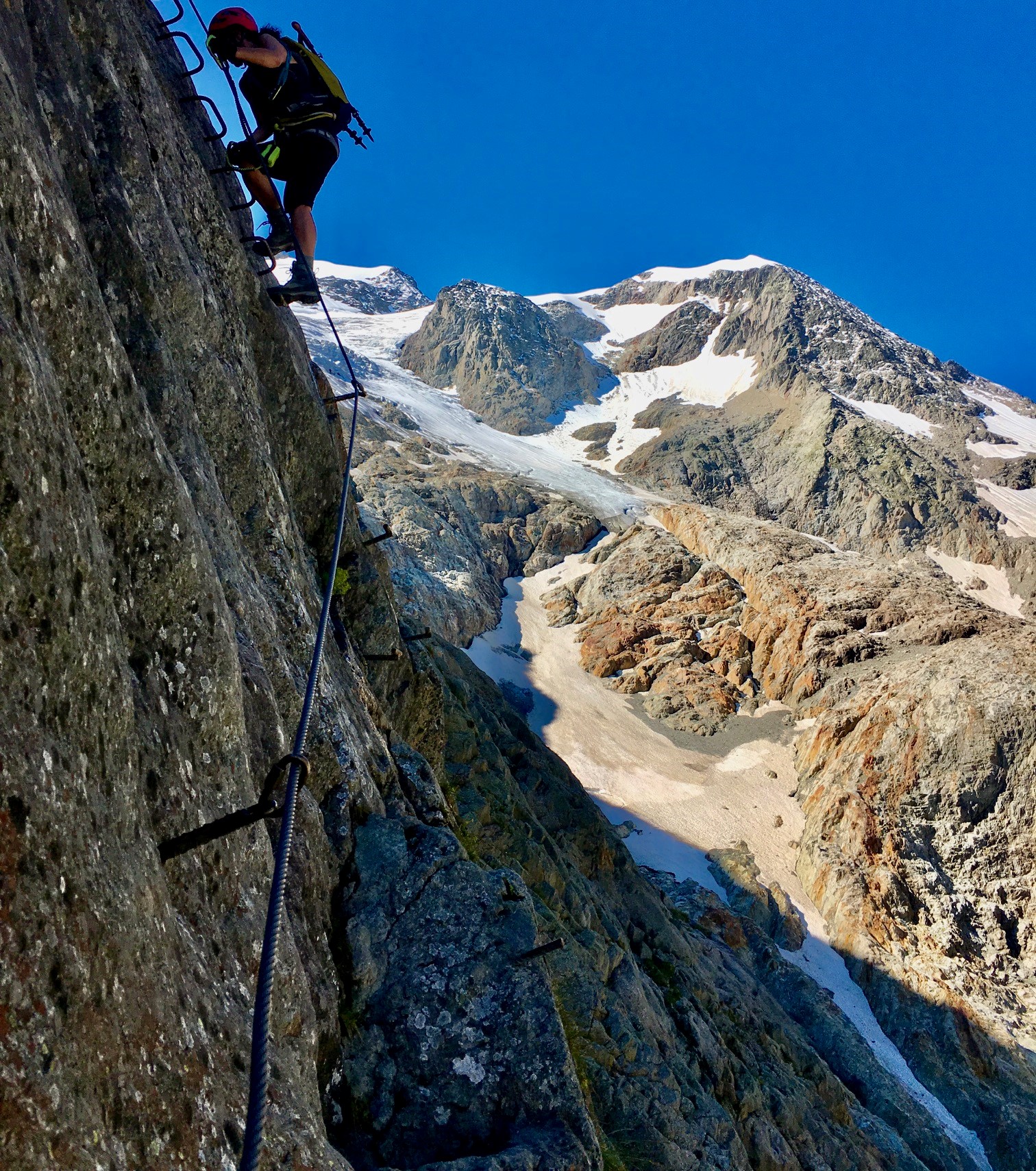

Eiger-Ostegg: not for beginners
Cette via ferrata exigeante et techniquement difficile longe le versant est du célèbre Eiger. Elle offre une grande variété de passages techniques, de sections escarpées et de vues spectaculaires. En raison de sa difficulté, elle n’est pas adaptée aux débutants. Les grimpeurs doivent avoir l’habitude d’utiliser le matériel de via ferrata et ne pas avoir le vertige.
Vous pouvez accéder à la via ferrata depuis la gare d’Alpiglen (accessible avec le chemin de fer de la Wengernalp depuis Grindelwald) en empruntant l’Eiger Trail jusqu’au croisement P. 1758 du sentier de randonnée menant à Bonera et Grindelwald. Suivez ce sentier jusqu’à un pont enjambant un ruisseau, puis continuez plus ou moins à l’horizontale jusqu’au croisement du sentier de randonnée menant à l’Eiger-Osthütte.
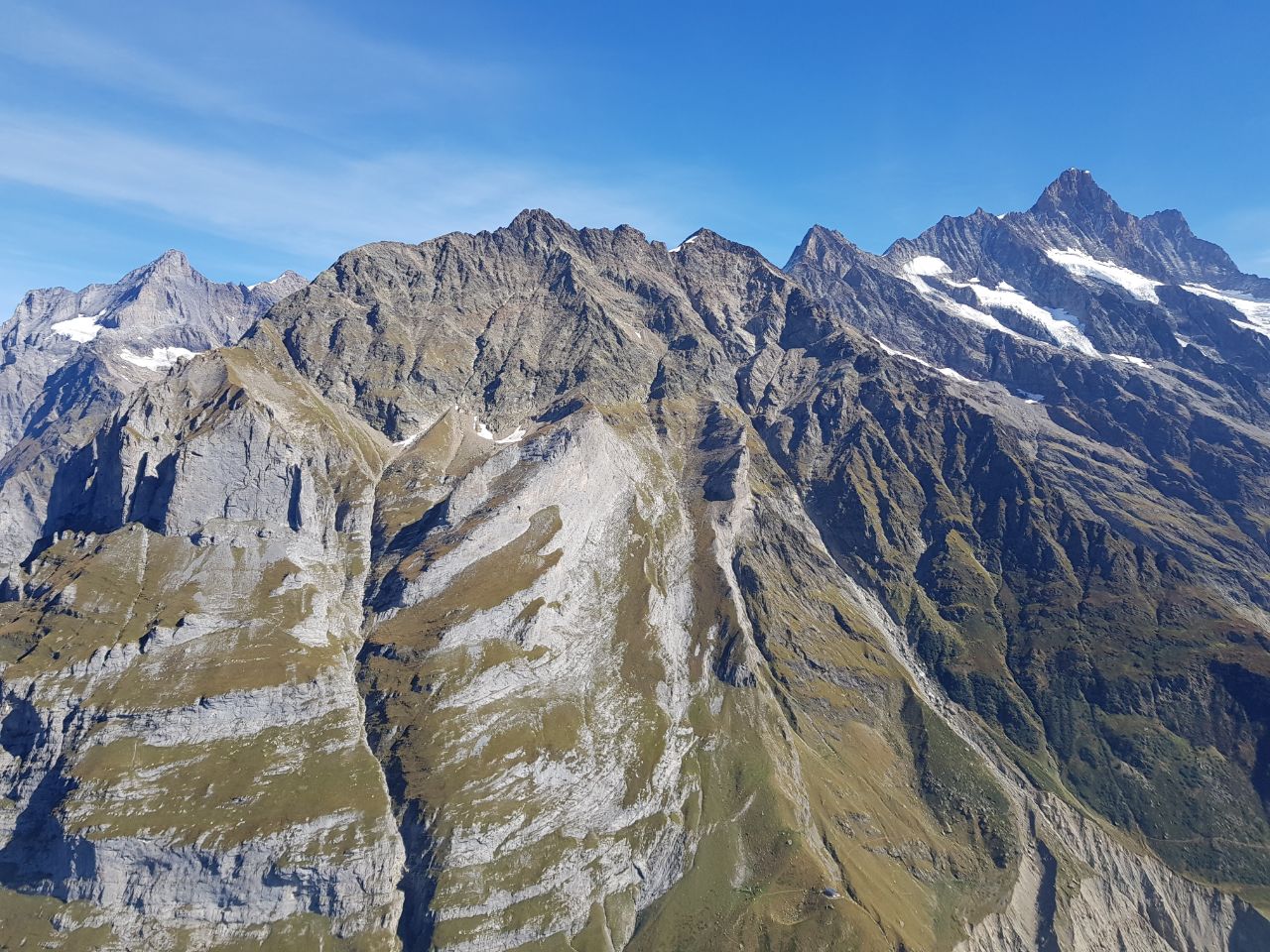
Visites guidées
Vous pouvez également parcourir toutes les via ferratas dans le cadre d'une visite guidée. Pour en savoir plus


